Saturday, 11 July 2015

BJ's EWTBCD Guest Season - A Poem from my friend Ryan

Ryan is a bit of a legendary writer in my mind...at the moment he's a student of history, of several kinds, and one of the most lucid, kind and clever leftie political people I know.  Many a question I have become confused about and have asked him, to have the crap cut through in about 3 sentences, and the way made clear.  He's good like that.  It's possible that should he ever go to the dark side, he would be a magnificent cult leader, such is his versatility with words, argument, and reason!  Thankfully, I've rarely met anyone more wedded or certain of a good principled way to do things - everything, in life.  All wrapped up in a nice beardy package.  (I am not a fan of beards as a general rule; I feel the longer and bushier they get, the more unreasonable the wearer tends to be....he is the exception to the rule.  His beard is not impinging on his brain at all.  Strange.  Also suits him.  Stranger.)

I'm aware this is a very odd intro to this small blog bit.  I quite adore Ryan, and asked him to write a big political blog bit...but he is so busy with the many political and studying things he is doing (those PhD's don't do themselves), that he has contributed me a smaller post...But still good.  One of the things Ryan does is to further the poetic styles of old, in this case, in the style of the foryrdislag of Eddic poetry.


Sail On

Song of sea grows
Soaring wind calls
Lines are leaping
Lofting skyward
Docks creak dully
Detach and drift
Gulls cry grandly
Go now lightly

Roar on rising
Ride now onward
Wind hair whipping
Wild waters
Salty spraying
Smooth face glide on
Ocean deepens
On it pulses

Eyes peer ever
Endless spaces
What there wonders
Wise and fools all
Stretching sea calls
Swelling boundless
Freely fly those
Fleet on the sea
 

Just a quick end note: Ryan is an Asatruar, a modern follower of the Norse, Scandinavian and Germanic Gods.  They have one of the strongest moral codes I have ever read, and I admire it much.  My own eclectic approach has not found its moral precepts bettered, anywhere I have read.  There's an annoying and damaging history of this particular set of stories and myths being hijacked by fascists and general right wing racist supremacist nutters.  Ryan (and I) have no truck with that bullshit in any way shape or form.  Its cultural ransacking for lazy minded violent fools.  One of the groups Ryan is involved in  (and helped set up) on facebook specifcally combats this kind of racist appropriation of stories - especially these stories, so filled with honour.  Just wanted to say my bit to let anyone out there know that Asatru and those following it are not a homogenous bunch of racists - as the loud appropriating minority would have the media and anyone who reads without further research, beleive.  

Friday, 3 July 2015

BJ's EWTBCD Guest Season Continues! 'The Tripods', by my friend John!


Now, I have been having a mad busy fortnight, so the Guest Season is slightly extended.  This is fine, because we are all having such a fun time with it!  My friend John's previous entry here, on the Rise and Fall of the Ferengi had such a nicely high hit rate that I have bothered his brain again, and he has written me this.  He's astonsihly punctual - I asked him to do me another piece, and he had it to me with illustrations, within 24 hours (he is always this good), and now I have made him wait a week and a half before I put it up here.  Apologies, John, I can only claim job interview and volunteering time madness - oh, and a couple of 3 hour commutes because the trains have suffered in the heat don't help.  But the time delay is all mine.  

Now!  No waiting any longer!  Read on, and remind yourself of a vintage UK 80's TV series for teen/tween viewers, that you will NOT have forgotten if you ever saw it, or will be wanting to see if you missed it...I remember it as weird and wonderful, specially the dodgy series 2!  Over to John...

The Bad Guys Won: The Tripods on TV.

A tripod! 
 
In 1984 the BBC decided to shake up the schedule: ‘Doctor Who’, now in his sixth incarnation was told to hang up his multicoloured coat and the Saturday afternoon slot was given over to ‘The Tripods’.

This new series was based on a trilogy of books by John Christopher published in the late 1960s about a future ruled by terrifying three legged creatures and the young boys who set out to defeat them. The books are still in print today and were joined in 1993 by a prequel.

The series starts in a village in England and we are told it is the late c21, however it looks like the mid c15. This is the future under the control of the Tripods. The people are happy and content with their simple life in the fields and everything seems fine. A giant round foot then plants itself in the millpond as a Tripod arrives in the village, one of only five times they are seen on screen, ready for capping day.

The ‘cap’ is a piece of technology attached to the head that the Tripods use to control the population. It is fitted as people reach adulthood. It is fear of being capped after seeing its effects on an older friend that starts two cousins on their journey.

Will and Henry decide that they don’t want to go through the capping ceremony, and run away from home. They have heard from a passing stranger of a group of freemen who live in the White Mountains somewhere in France. So that is where they head. After crossing the channel they encounter a tall French boy, with Bristol accent, named Beanpole and we follow this journey through series one.


 Heroes: left to right - Will, Henry and Beanpole

The first series had a lot of hype. You could not escape Tripods, they were on the cover of ‘Radio Times’, there were features on ‘Blue Peter’ and ‘Tomorrows World’, plus the three young stars that were all picked from open auditions were interviewed across the BBC, from ‘Breakfast Time’ to ‘Newsnight’.

But there were problems: the plot of series one did roughly follow that of the first book. However there were some distractions. Two lines about a vineyard become two episodes of the boys falling in love with French peasant girls. There were also other non science fiction asides that some felt distracted from the plot. Not least the fact the fact that for most of the series the titular Tripods were conspicuous by their absence.

Part of this was due to the way the effects were handled. Computer matting is now very common, and very simple, but in 1984 it was cutting edge and the equipment was very expensive. The BBC only had one computer set up for this, and its primary function was to create the graphics for the weather forecast. Well this is Britain after all.

During office hours the weather forecasters had total control over the computer. It was only between about 6 and 10 at night that the ‘Tripods’ team could get in and work. But their work was effective. So much so that many people thought the BBC had built a life sized Tripod.

In spite of the problems season one ended with reasonable ratings, up on where ‘Doctor Who’ had been in the Spring, and series two was given the green light.

Suddenly things became very camp.

The second series follows Will on his journey into one of the Tripod cities, where he meets the masters. The beings that control the Tripods, his mission is to gather information to help the freemen defeat them.

All sounds fine.

The model for the city was the largest model ever made for a UK TV production, and took up a whole studio floor of Elstree, around 100 square meters +. Real effort was made on getting the perspective right and it worked.

It was once inside the city that things got a little weird.

The humans, all male, are put into tight shorts and harnesses then sold as slaves to the Masters. Will is told that he will soon forget about girls, and that because of the environment he will not live much past 25. When not serving the Masters the slaves all hang out at a bar called The Pink Parrot, and most of them look like extras from a ‘Frankie Goes to Hollywood’ video and are led by a Freddy Mercury look-alike complete with moustache.

Now as Jerry Seinfeld would say, ‘Not that there is anything wrong with that’, and all of the innuendo seems to have been unintentional. But the tone just didn’t seem to sit well rest of the series. It was also very different from the book it was based on. It didn’t help by this time the series was struggling to hold on to its audience. 

So while Will was having a bona time trolling about the Master’s city the office of the Director General was having a vader at the numbers. The costs were through the ceiling and the viewing figures were through the floor. Michael Grade, who didn’t like Science Fiction anyway, pulled the plug.

The series ended on a cliffhanger as the Tripods destroyed the hideout of the Freemen, ending with Will and Beanpole looking over carnage and the bad guys victorious.

Instead of the proposed third series ‘Doctor Who’ was revived, and promptly put on trial in redressed sets left over from ‘The Tripods’; the BBC have always been keen on recycling.

So what went wrong?

One thing to remember is that the books are written for young readers. They are not full-length novels and they have a lot of adventure but the writing style is brief and to the point. They are books that a seven year old can read alone with out much trouble. Where the BBC went wrong was to try to pad them out too much. There aren’t 13 episodes in each book, there is probably at most eight, and two series of 10 could have told the whole story.

Part of the reason for the additions is to add in some female characters. There are no girls in the books, Christopher himself says that this due to the belief in the 60s that while girls would read books with male characters boys wouldn’t read book with girls as characters. To rectify this the BBC added the French girls. Although by the time we get to the city it’s an all male affair. 

Also the production didn’t seem to know what it wanted to be. Was it Science Fiction, or was it period drama. While this confusion seems to work for ‘Doctor Who’ here it just seems muddled. Plus it probably added to the spiralling costs. All in all a series that started out with a lot of promise ended up as a bit of a mess, and we never get to see the end.

Although the BBC story ends there it might not be the end of ‘The Tripods’ on screen. Disney acquired the rights in the mid 2000s and had planned to make a film version, set in America, however this seems to have been shelved once they bought Marvel. Meanwhile the series has a huge fanbase in Germany and a ‘Tripods’ convention was held in Hamburg to celebrate 30 years of the show.

The DVD of the complete series one and two was released after much fan pressure in 2009, it is well worth checking out. The books on which the series is based are also readily available and a new edition was published in 2013. 

 The Master's City

Sunday, 21 June 2015

Doctor Who Books Read and Heard, Part 18!


This post: novel treats from the eras of the 2nd, 3rd, 6th, 7th and 8th Doctors – and all of them in the form of short stories. 
A note on order.  Target Originals are not read in order of publication (which was all over the place), but in order of each Doctor, and each Doctor is read in order of their stories broadcast on TV.  However, I jump about in terms of which Doctor I read at any given time.  The Virgin New Adventures for Sylvester will be read in order; as will the BBC 8th Doctor series (as though they had been on TV, see?  I’m trying to get an arc flavour).  The BBC Past Doctors series and the Virgin Missing Adventures are simply read in terms of which one I fancy next, as they are stand alone adventures slotting in-between the TV ones.
Oh, and in case you forgot, I’ve taken to recording which books I read that are actual paper copies, and which are Kindle or other electronic.  I’m being social historical for my own benefit. I want to see how long it is before I just plug books straight into my brain, how many years before I’m a reading cyborg.

As always with these rambly reviews: OFTEN LARGE SPOILERS ON ALL BOOKS IMMINENT!!!!

1.    Doctor Who: Short Trips no.28 – Indefinable Magic, by Various, edited by Neil Corry (Big Finish Short Story Book Collection)
(This was a very pleasing collection to read.  Right from the 1st story, by James Goss, about sentient books going around altering reality to fit their contents, even if those contents were fantasy.  “There’s nothing more dangerous than a book with ideas”, says the 8th Doctor.  Very wry, and nicely played in tone, this story.  The collection had lots of moments of lovely idea expression, like this one: “I would call it something else.  I would examine it, establish its properties and then call it something else.  I would not call it magic, sir” [says the 1st Doctor, can you tell?!]  “…because to call it magic is to turn your back on logic and reason and basic curiosity about the universe.” [- From Eddie Robson’s ‘The Power Supply’.]  That told those people! 

I am going to have trouble keeping this ramble anywhere near succinct, as most of the stories here had something lovely about them, something thought provoking.  Highlights are: Ian Farrington’s ‘Favourite Star’, which was a clever tale about false horoscopes and friendship; Matthew James’ ‘A Hiccup in Time’ which was partially about doing laser eye surgery on Henry VIII.   ‘Shamans’ by Steve Lyons had Leela investigating table tapping via the Fox Sisters.  ‘The Fall of the Druids’ by David N. Smith had the best usage of Kamelion I have yet read; especially when paired with the marvellously self preservatory Turlough.  Simon Guerrier’s ‘Pass It On’ had an especially lovely and evocative first section, with a clever narrative style that I wanted to try and do myself at some point. ‘The Science of Magic’ by Michael Rees has a complicated fantastical magical creature invasion scenario, involving Pertwee and the Brigadier and Liz Shaw. ‘Hello Goodbye’ by Jim Sangster is short and sweet, about the Doctor leaving UNIT, and in which the absence of “any goo to analyse” is mourned.

‘Trial by Fire’ by Mike Amberry has the 6th Dr and Evelyn only just escaping burning at the stake by the Inquisition; a very nice twist on a city of disappeared people.  ‘What Has Happened to the Magic of Dr Who?’ by Gareth Roberts goes through the whole book, parts here and there.  In letter form.  Very funny complaints from viewers of each era as to what is wrong with the current Doctor compared to the one before.  Exhaustive and correct.

Lastly, ‘Blessed Are the Peacemakers’ by Caleb Woodbridge, in which one of the cardinal arguments of religion vs. any other way of thinking is well put:
“It is truth, absolute truth, and every world must know it.”
“If it’s so certain, why don’t you try to convince people by sitting down and chatting to them about it, hmm?” [says 4th Dr.]
“That’s all you offer, Doctor – uncertainty and ignorance.  What kind of freedom is that?”  [replies invading, certain entity.]
…What indeed?  This is a great collection about the magic of Dr Who, the idea of magic as advanced science, the idea of magic as itself, and some other bits between.  Thoroughly enjoyable.  ACTUAL BOOK.)
2.   Doctor Who: Short Trips, no. 23 – Defining Patterns, by Various, edited by Ian Farrington (Big Finish Short Story Collection)
(Hmm.  Now this felt like it should have been a great collection, all about the butterfly effect, and actions causing far distant unforeseen consequences or the patterns you can see throughout events – or that only the Doctor can see…But it didn’t read well, to me, at all.  Threaded through the whole book is a story of the Doctor and some new UNIT companions in 1957.  This story is supposed to be a pattern in itself, reaching a twisty conclusion in the last story.  I won’t spoiler the end of that continuing thread, because I didn’t think it was very good but someone else might, so I don’t want to ruin it for them.  I found it a predictable end, coming on the heels of some stories that were ambiguous and opaque in the wrong ways, boring ways.

The stories I did like were ‘Time and Tide’ by Neil Corry, where the 7th and Ace save some people from a large illusion; interestingly written.  ‘Losing the Audience’ by Mat Coward had a small section warning against seeing patterns when probability is concerned, that had a good point.  ‘Séance, or Smoking is Highly Addictive, Don’t Start’, by John Davies had a nice message of taking life and holding onto it, even when other people die around you.  ‘The Celestial Harmony Engine’ by Ian Briggs was good, in a very strange overblown romance novel sort of way.

Simon Guerrier’s ‘The Great Escapes’ has Lucie Miller trying and failing to escape a situation many times; the story ends with her about to be executed – the Doctor has not come.  Steven Savile’s ‘Loose Change’ is a nice circular story about the adventure of a coin.  Its symmetry pleased me.  John Dorney’s ‘Lepidoptery for Beginners’ contained the lovely line: “sufficiently advanced science is indistinguishable from nonsense”, which I often agree with when tired.  Clever little story.

I found this beyond patchy.  Despite the recurring pattern story they were setting up here, many of the stories read simply as excerpts, as unfinished. They read unsatisfying.  Comparing it to the very high quality of the one before…puzzled.  ACTUAL BOOK.)
3.   Doctor Who: Vanderdeken’s Children, by Christopher Bulis (BBC Eighth Doctor Adventures)
(This one was an interesting story.  It started off very slowly, and I had troubles getting hooked.  Then it became a sort of scifi story like Alien, when a crew are exploring a spaceship and finding strange puzzles and mysteries – and grisly murders.  So like a sort of Crystal Maze, but violent.  [And lacking the incomparable Richard O’ Brien.]  Then I became interested.  It also had the extra element that the abandoned ship on which these mysteries are taking place has been discovered simultaneously by two nations who hate each other and are at a sort of perpetual military readiness for standoff; both want the ship as salvage.  One is a cruise liner, with civilians that may get hurt.  Both cultures of people are very different.  This leads to allsorts of varied and likeable/ pleasantly annoying sub characters, most of whom get growth if they are not killed.  In the meantime, the Doctor and Sam are trying to solve the puzzle of what the hell is going on, at the same time as trying to prevent an all-out war that will end either or both civilisations.  This all does sound like a mish mash of several different films, but it doesn’t matter, as it’s written engagingly and plausibly.  I enjoyed it, both as a semi horror, a thriller and simply as a good mystery.  ACTUAL BOOK.)
4.   Doctor Who: Timelash, by Glen McCoy (Target Original)
(6th Doctor.  Ehem.  Am I the only one out here who enjoyed both the TV version of Timelash, and thence, also the book?!  Is it really only me?  It was of course, especially interesting once the illustrious Herbert appears, and I did like the spoiler discovery of who he was at the end, it gave me a smile.  I am not one who will criticise the plain sets of the original TV outing, their beige boxiness.  I definitely will not criticise Paul Darrow [ever], and I loved the Richard III haircut, which I did miss seeing in the book, and I had trouble remembering how well he delivered his sibilant lines, so his character to read, was not so interesting.  I imagined with slightly more gusto, the timelash itself and the Borad’s use of it to dispose of mostly anyone.  So I made my own small mental improvements.  But mostly, this is one of those stories where I am perfectly happy with the original and the book doesn’t deviate much at all.  The only thing I would say about the book was that Glen McCoy has a bit of a strange writing style, some odd word orderings within his sentences.  But I am a fine one to talk of such, hmm?  So we’ll let it pass!  ACTUAL BOOK.)
5.   Doctor Who: And the Web of Fear, by Terrance Dicks (Target Original)
(2nd Doctor.  Now.  I understand that [a] this is one of many people’s favourite stories ever, and since we only got it back recently in its fullness, they love it even more.  And [b], it’s not one of my favourite stories on TV at all.  I felt it dragged a bit, with an overpadded middle, and I got a bit bored waiting for the Great Intelligence to reveal who it was hiding within.  I also got fed up with the military stereotypes of the time: the doughty Sergeant, the cowardly Welshman etc etc, yawn. 

Oddly, I didn’t find this a problem in the book at all.  I found it flowed much better, I couldn’t see the actors making their annoying dated expressions.  I liked several of the subsidiary characters more, and I felt Victoria in particular was less of a contrivance for shifty plot balancing and filling in time, and more of an actual person with plausible reasonings to her actions.  Of course, the one thing the book could not re-create was the joy of those marvellous underground Tube sets, and the atmosphere of menace; or the lovely sound-effect of the web being spun.  Or that infamous and nicely shot battle scene [I love the Brigadier…though obviously, he’s yet to become one].  I’d say this is one of the better Terrance Dicks ones, for not losing nuance of dialogue etc – he does tend to cut out a lot of the banter of the Tom Baker stories, which ruins one of their great strengths, and several companion characterisations.  But here, he did well, I thought.  ACTUAL BOOK.) 
6.   Doctor Who: Rags, by Mick Lewis (BBC Past Doctors Adventures)
(3rd Doctor.  This was a difficult one.  In one sense, it’s almost purely a nasty horror of the kind Shaun Hutson or early James Herbert used to write: its dirty, unkind, menacing, deeply violent and very unsettling – it makes its readers wonder at how much baseness they possess and what would make it come out.

Another factor is that this is basically about class hatred and division, and I read it during the General Election just gone [May 2015], which made it especially piquant [a word I think I have *never* used before].  Being about class divides, resentments and deeply held hatreds, bitterness etc – it obviously had to be the third and most Establishment Doctor, for this story – he was always going to be the number one choice.  That being the case, the oddest thing about this story was that despite the spot on characterisation, the Doctor is barely in this book.  Jo Grant features heavily, and the undoing of her character is a painful thing to read.  The Doctor foolishly leaves her in the danger zone of influence of the strange punk band of class hatred, laying waste by means of mind control through music, to many rich or upper class people its entourage [ever growing] comes across.  Jo is susceptible and she succumbs.  She doesn’t do violence, but she very nearly does, and the reversal of her relationship with the Doctor is sad to read.

It’s not explained why some people simply don’t feel the music’s malign influence, namely Mike Yates [yay, always happy to read Yates], since Benton and even the Brigadier aren’t immune, except that Benton gets a sort of military version and ends up wanting to discipline his own class of people, whereas the Brigadier ends up feeling very murderous towards what we could variate and call Hippy Scum.  I always think, in these stories, you need to be extremely careful how much you mess with the characters of recurring or main players.  Hence Yates comes off ok, as he basically gets to stay himself and be almost the last reasonable person standing in a bloodbath; whereas Jo practically loses her mind with only flashes of lucidity within hatred…and the Doctor, after spending most of the story playing catch up is brought to his knees by the creature himself and gets lost for about 3 chapters more.  Risky and I’m not sure entirely successful.

As a horror this works fine: it’s questioning of society and very unpleasant.  As a horror with the Doctor, I wouldn’t say it works as well as Mark Morris’s Deep Blue, say, but it’s stuck with me.  I want a wash.  For a horror, this is a good thing.  For a Doctor Who novel?  Not so sure it’s sticking with me for the right reasons.  ACTUAL BOOK.)
7.   Doctor Who: Nightshade, by Mark Gatiss (Virgin New Adventures)
(7th Doctor.  This one took me an age to finish and I’m not sure why.  It’s another one where I feel the character of the Doctor got a bit lost amidst a cast of many many subsidiary – and very well written indeed – characters.  He was not a main element of the plot here.  I like the Doctor to be the main thing in a Doctor Who story.  I like the companions to be present much also.  I like a good range of secondary characters.  But I don’t like either the companions or the secondary characters running the show, and this was what happened here [and, by the way, is the entire writing premise of new Who – as well as great whacking dollops of EMOTION, too much for this one here who will cry at anything…I am moved to think of the Matt Smith new Who ep where we defeated the cybermen with love.  I can see the idea, but it’s too drippily sugary, even for me, and I am a sugar lover.  Anyway…].

Saying that, even though the Doctor is not as big a player as I like, Gatiss does create some lovely people for me to get to know.  I love his old men characters – he does love and respect the older person, Mark Gatiss, which is rare and rather lovely in a writer nowadays [think The Last of the Gadarene too – another plucky and excellent older man].  The character of Trevithick is wonderful: resourceful, realist: I really rooted for him.  Hawthorne, Vijay, Holly, Cooper – all the scientists, a great and well differentiated cast.  The vast amount of villagers were well done.  Poor old Jack Prudhoe. [They all had brilliant names too.]

Ace was an odd thing here.  She has a romantic attachment, so there’s echoes to both Remembrance of the Daleks and also Curse of Fenric, and Gatiss is well done to mention her earlier developments as a character in the Timewyrm section of the New Adventures.  And yet – I do feel that Ace’s personality keeps chopping and changing from tale to tale; unlike Sam in the Eighth Doctor Adventures, for contrast, who is markedly and plausibly changing, story by story, and we can see why: every move backward and forward is painted, understandably.  To follow a character’s growth this way is always great for a reader, satisfying.  Even watching why a character cannot grow, if well painted, is fascinating.  With Ace, despite the fact she has/had such potential, I feel writer after writer in this series is simply using her as filler – she’s either the grumpy feisty teen of how we first ever see her in Dragonfire, almost a sort of developmentally stuck but bolshey 15 year old; or else she’s a battle weary semi soldier.  And none of it much is genuinely shown or explained in either dialogue or action.  She just comes off as a bit schizophrenic between books: each story doesn’t affect her to the next one – she resets.  I think this series is failing Ace.  Not just this book.  The continuity between them, from book to book to book.  A shame, I love Ace.

In short, this book is a wonderful set of characters, with a very nice Civil War interlude I didn’t see coming, but it doesn’t have a strong Doctor or Ace element to pull it along.  Which is to its detriment.  Try it, you might well completely disagree with me.  ACTUAL BOOK.)


Friday, 12 June 2015

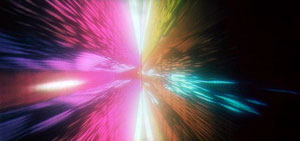
BJ's EWTBCD: '2001: A Space Odyssey' , by my friend Will!

Will is an American friend of a good old other American friend on facebook (that marvellously confusing tool of both socialising with brill new people and being insulted by people you've never met, at length, in the same day).  Now he's a friend of mine too.  We've chatted a fair bit and he visits my page with regularity, which is nice.  Most people get bored after a while!  We've established we're at polar opposites on some things (political viewpoints, some ideas on religion), and yet oddly close on many others (we seem to share a lot of other ideas in common and like the same books).  An excellent way of showing you can put the same thing in front of two people and get two different things to take away from it.  He's erudite, funny, clever and kind.  You'll like him too.  Off we go...
***


2001: A SPACE ODYSSEY, 47 YEARS DOWN THE ROAD

First, thanks to Wendy Harding for inviting me to guest-blog. If there's a livelier, more intelligent and thought-provoking conversational space than Wendy's on Facebook, I've yet to find it. Initially, I wanted to essay forth on the subject of sacred art, but finding that topic too vast and cosmic for my current time restraints, I decided to go with some ramble-rumination on 2001, a film that will forever invite speculation and contemplation. Actually, there are those who do regard 2001 as a form of sacred art, so perhaps in the future these somewhat random, very subjective observations of mine will be an entry to a more systematic exploration of sacred art. (I am hoping).

- I wasn't really a fully sentient adult when, on a hot summer night I went to see 2001 with my fellow nerd friends; this was a day after, I believe, the film premiered in 1968. Still, as the film is primarily a visual experience with minimal dialogue, it certainly made an impact on me as it did on most people. I first saw the film in Chicago's Michael Todd theater, one of those wide-screen, palatial movie theaters that don't really exist anymore. One of my fonder memories of the experience came during the intermission - yes, the big blockbuster films of that era often came with an intermission - when the theater's coolant system had broken down and some wag in the audience shouted out, "Hal, please turn on the air conditioner!". As all in attendance were sweating profusely, this got a highly appreciative response from the audience.

- Since 2001 is now considered one of, if not *the* best film of all time, some might find it peculiar that the film actually received mixed reviews following its premiere. One reason for this was that big blockbuster films were not supposed to be "Euro-arty" - the pacing was comparatively  slow, the acting was for the most part restrained with minimal dialogue, and the soundtrack was, to say the least, very unusual. Yes, it was science fiction, but as sci-fi goes, it was genre-busting, genre-transcending. This was obviously difficult for some critics to get their heads around. I think a similar case could be made for Robert Persig's 1974 book, Zen and the Art of Motorcycle Maintenance. Three pages into that book and you realize that you're in the presence of greatness, yet Persig was rejected by publishers 70-plus times before some publishing house took a chance on him. Of course the book has been in print ever since and is regarded as a modern day classic. So why the rejections? No, I don't think most publishers or film critics are stupid, but they do tend to think strictly "in the box" and are not at all wont to stray from established genre, whereupon readers and movie-goers  generally find their comfort zone, and where publishers find their best sales. What was ZATAOMM as a book? A mystery, a supernatural thriller, a philosophical manifesto, a psychological auto-bio? It really is genre-less, and like 2001, it's  sui generis, distinctly one of a kind.

- By the way, if you've never read ZATAOMM, I should tell you it really has nothing to do with either zen or motorcycles.

- Another reason for 2001's initial mixed reviews is, I think, is the year it came out. When we're young spring chickens, I think there's a tendency to believe that what's going on in the world around us is the natural order of things, business as usual. So it wasn't until years later that I truly reflected on 1968 and what a preposterously tumultuous year it was: two major assassinations in the USA, (ML King and Robert Kennedy), apocalyptic race riots in every major American city, the Vietnam War claiming the lives of 15,000 American service people, as well as God knows how many Vietnamese,  Paris shut down by New Left revolutionaries, the Soviets invading Czechoslovakia, the riots at the Chicago National Democratic convention ..... I'm probably forgetting something, but trust me, it was one helluva year. And 2001 the movie? It didn't address any of that, not even obliquely. I recall reading a review in which a doubtful critic wondered, rather forlornly, I thought, how humankind had moved from '68 to '01 without solving its racial problems. I believe this critic and others found the film's projection of space-age tech with all its slickness and metallic coolness to be rather obscene, particularly in light of the riotous passions of the day.

- How did 2001 do in terms of predicting the future? Obviously not too well. It should be remembered though, that at the time, the concepts of regular shuttles to the moon, a Hilton-like space station, a moon base, a manned mission to Jupiter, even exotic concepts like advanced Artificial Intelligence and ET contact, were not considered unreasonable projections - it was in '68, after all, that we put two astronauts around the moon, and in the following year, Neil Armstrong would walk on it. Social inequities and racial strife notwithstanding, the future, at least as far as tech and our "space-age destiny" were concerned, looked very bright indeed. So what went wrong? Why aren't we vacationing on the Sea of Tranquillity, why isn't there a Disney Land on Mars? Well .....

- ...... I think we were bedazzled by what some call " The Myth of the Age of Eternal Progess", in which, by dint of the Western technological progress, we supposedly transcended the rise and fall cycle of all previous civilizations. This is a beguiling myth indeed, and it's had a million proponents - HG Wells, Carl Sagan certainly come to mind. It's also fairly hubristic, in my estimation, and it can lead to a great deal of harmful denial regarding the world's current state of affairs. I think that Western Civ is in obvious decline even as we speak, and we'd best be preparing for a largely non-tech future. It really comes down to the historical cycle of empires and civilizations, no matter if it's the Roman Empire or a valley presided over by a tribe of Native Americans - eventually they're going run out of resources, and the costs in maintaining the empire are going to overrun the benefits derived. There are always those who maintain that "they'll think of something" to allow for further tech progress and continuance of our rather comfy lifestyles, and there's Ray Kurzweill and his prediction of a Parousia-like "Singularity", but I surely wouldn't bank on such.

- I should say something about my personal aesthetic reaction to 2001. Stanley Kubrick was never my favorite film director; I often found his style to be cold and bloodless, detached and not in a good way. However, Kubrick's chilly style was the perfect fit for 2001; this was a marriage that produced a classic. To be sure, I still find the film to be cold, but existentially, awe-inducingly, wonderingly cold - a little acre of fear and trembling in the face of what's called the "Mysterium Tremendum", that sense of awe that comes with a glimpse into the Unknown regions. I've often wondered at those who found, and who still find a sense of serene beauty in the contemplation of the depths of outer space. Beautiful, in a sense, yes, of course, but I've never found anything the least serene about its abyssal depths, unfathomable distances and its extreme unfriendliness to carbon-based life forms.  Kubrick' rendering seems to put me right there in the midst of it. For all of Kubrick's game-changing cinematic influence on, say, George Lucas and his space sagas, I think the film that comes closest to 2001's depiction of space's yawning depths and blank inhospitality to human life is the 2013 film, Gravity.

- In his contemplation on the nature of God, Blake wonders what kind of Hand could have fashioned the tiger's fearful symmetry. What about the Hand that fashioned the mind-numbing vastness of the universe!? Fact is, 2001 really is a metaphysical film with a metaphysical message, and this is what will forever keep it in the conversational grapevine. The film addresses ontological issues, the meaning of evolution, the ultimate destiny of humankind, and the  progress of physical, material existence into that of pure Energy and Spirit - these themes are complimented by the film's slow but stately pacing, the use of symbol such as the black monolith, the alignment of planets, the transformation  of astronaut Dave Bowman as he moves about the dream-like neoclassical bedroom at film's conclusion. And of course there is the 2001 "theme song", Richard Strauss's Also sprach Zarathusta, a reference to Nietzsche and the concept of the Ubermensch .......

- Is the Übermensch, the newly born Star Child, a pitiless, beyond-good-and-evil Being, come to replace humanity? I don't know, but it's disturbing to think that the Star Child might be mirrored by the spacecraft's sentient computer Hal 9000, who kills off most of the crew in the name of preserving the mission. Adding to this chilly mix is the scene at film's beginning in which the hominid flings a boar femur, his war-club, into the air and we CUT TO: the space station. Implication: War is indeed the father of all things, as Heraclitus said 2500 years ago. Well, perhaps it is. After all, many, if not most of the advances in science came from the military. The personal computer, eg., was largely developed by the military.  In any event, my view is that we do evolve spiritually, and that in the fullness of time, we sublimate our baser passions into that which we call "human values", compassion, pity, kindness, empathy.  For a film whose theme is human transcendence, 2001 is decidedly lacking in what we would call human values.

- A few words on Hal the computer - no, we didn't develop human-level AI by 2001, but it's an ongoing concern of many that we're going to do so within the next 40 years or so. I have my doubts as to whether a machine can actually acquire a self-aware consciousness a la Hal, but who knows? It might be possible to build a computer so complex that a human soul - or some other immaterial entity - could incarnate in it. I actually wrote a poem about this once. But again, speculation. Whatever the case, of all the robots and AIs in filmic history, Hal is, for me, the most disturbing. As he lacks metal human-like limbs, he's short on the pyrotechnics we usually associate with machines-gone-rogue, but his unblinking electronic orange eye speaks volumes. It's the steady gaze of a non-human intelligence, very disquieting - but again, isn't the trans-human Star Child also a non-human intelligence? What might we expect from that? Those disturbing notions aside, I think it's a bit ironic that of all the film's characters, it's Hal who ends up displaying the most emotion. "Stop, Dave. I'm afraid ....."

- Even though 2001 was an MGM film, it was mostly filmed and edited in England. The Shepperton Studios were larger than anything Hollywood had to offer. When the film came out and movie goers beheld Kubrick's quantum leap in space depiction, there were rumors abounding that he had actually built an anti-gravity machine and had actually shot the space scenes in space. That should give you some idea of the fantasy-mad, conspiracy-addled climate of the times.

- My favorite spoken line from 2001 comes from Dr. Floyd's daughter (played by Vivian Kubrick): "I want a bush baby!" I still have no idea what a bush baby is.

- Thank you.


***

And that's all from Will for now.  Till next time.  And just to help any other confused people, whilst there were several points in this piece I wanted to debate, there's one thing I can definitely settle: this is a bush baby!


                                           from:          dharing.zenfolio.com